Get free quotes from drone inspection near you
Takes about a minute. Free, no obligation; providers reply to you directly.
The first time I hired a drone inspection company, I handed them a two-sentence project brief and assumed they’d handle everything. They showed up, flew for 20 minutes, and sent me a Dropbox folder of 340 unlabeled JPEGs. No annotations. No defect callouts. No report. Just… photos.
That experience taught me that hiring a drone inspection service isn’t like ordering a pizza. There’s a whole process on both sides of that flight, and if you don’t know what to expect, you’ll either get burned on deliverables or waste everyone’s time.
The Short Version:A professional drone inspection follows a seven-stage process spanning desktop assessment, pre-flight prep, on-site flight (~20 min), and post-processing. Vet providers with five hard questions before signing anything, and plan for 24–48 hours from flight to final report.
Key Takeaways:
- The actual drone flight is the shortest part — pre-flight desktop assessment alone takes ~1 hour
- FAA Part 107 certification is non-negotiable for any U.S. provider; no cert = disqualified
- The deliverable matters as much as the flight — push for annotated reports, not just photo dumps
- Internal surveys (e.g., solar panel electrical checks) cost $35–75+ extra and require specialized pilots
Before You Call Anyone: Define What You Actually Need
Here’s what most people miss: drone inspection is not a single service. It’s a spectrum. A roofer needs geotagged photos with defect callouts. A solar contractor needs orthomosaic maps and thermal overlays. A utility company needs 3D models of transmission towers.
Walk into a provider conversation without knowing which category you’re in, and they’ll default to whatever’s cheapest for them to produce.
Ask yourself:
- One-off or recurring? Single-site storm damage vs. ongoing portfolio monitoring changes your provider options entirely.
- What’s the output format? Photo set, annotated PDF report, orthomosaic map, 3D model, thermal analysis?
- Is there anything below the surface? For solar, external drone imagery only captures panel surfaces — electrical anomalies inside require a pilot with firefighting or home inspection credentials (and that costs extra).
The 5 Questions to Ask Every Provider
The drone service provider market has hundreds of operators with wildly different skill levels. Quality is not correlated with price. Here’s how to filter:
- Are you FAA Part 107 certified? In the U.S., this is legally required for commercial drone operations. No cert, no hire. Full stop.
- Can you show proof of insurance? You need general liability and UAS aviation liability. One without the other is a gap.
- What’s your pre-flight process? A real provider will describe a desktop assessment phase — satellite imagery review, airspace checks, weather evaluation — before they ever arrive on site.
- What does the final deliverable look like? Get a sample report. If they can’t produce one, that tells you everything.
- Have you worked in restricted airspace or near aerodromes? This matters more than it sounds — sites near airports require waivers, and providers who’ve never dealt with this will either delay your project or fly illegally.
Reality Check:Most pilots can take photos. Far fewer can deliver a properly annotated defect report with repair recommendations and severity classifications. Those are two very different services, and only one of them is worth paying for.
What Actually Happens, Stage by Stage
Here’s the real process — not the sales pitch version:
Stage 1 — Initial Scoping Call (~30 min) You describe the site, they confirm scope, deliverables, and timeline. This is where pricing gets set.
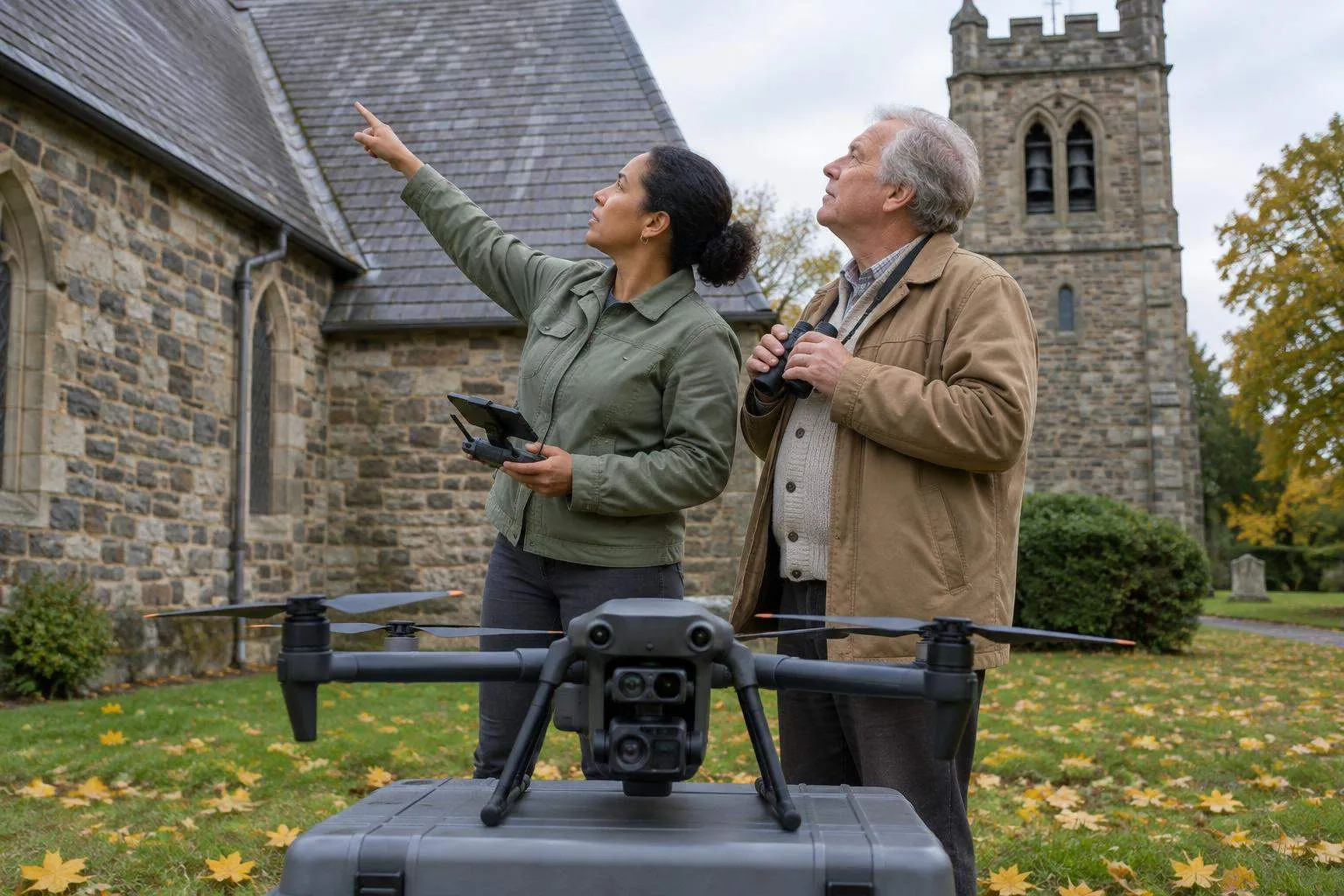
Stage 2 — Desktop Assessment (~1 hour) Before anyone drives to your site, the provider reviews satellite imagery, checks airspace classification, identifies potential hazards (power lines, aerodromes, historic site restrictions), and builds a flight plan with altitude and coverage paths.
Stage 3 — Pre-Site Confirmation Permits, client paperwork, weather verification. This is also when you should confirm your side: site access, point of contact on-site, any locked gates or restricted areas.
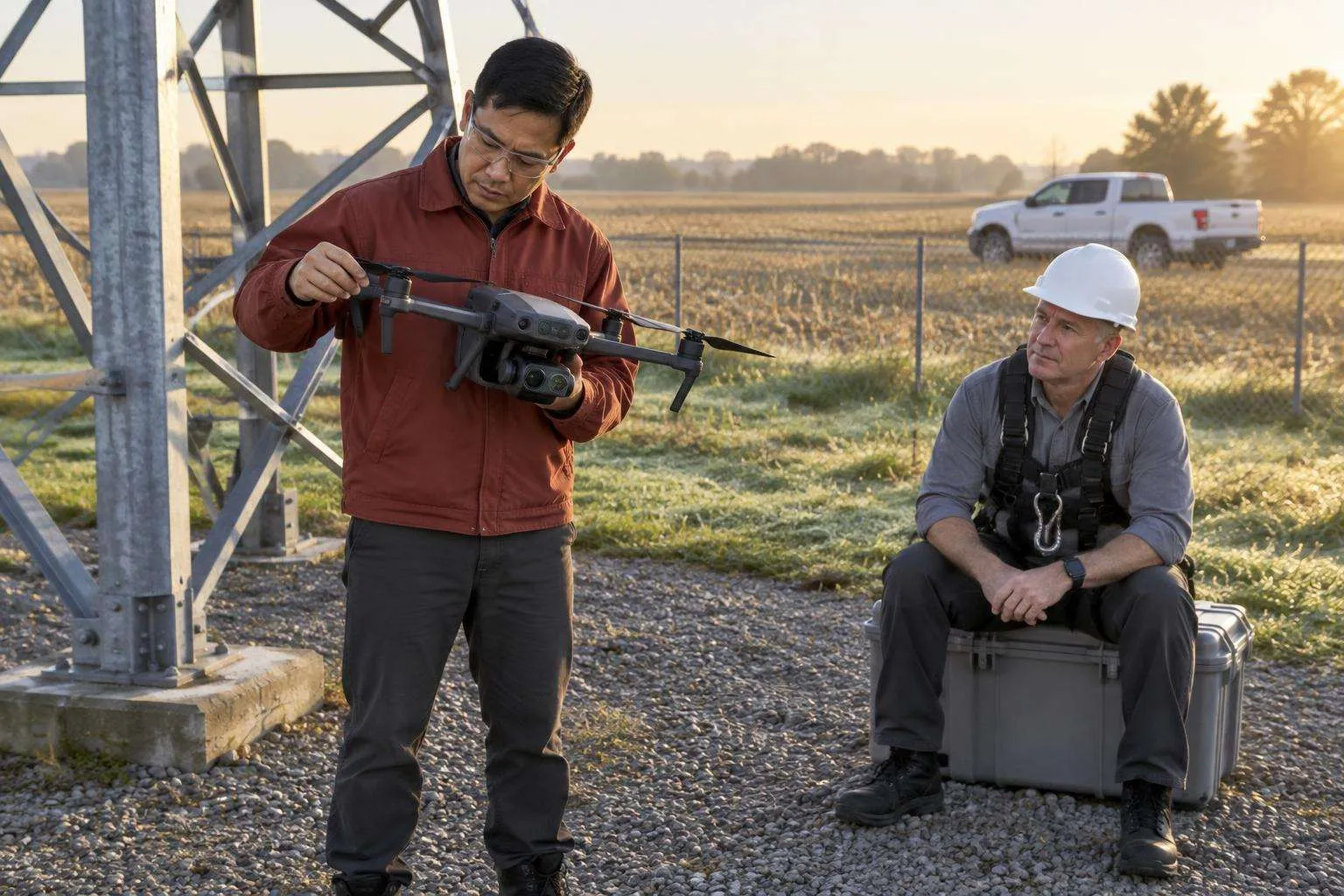
Stage 4 — On-Site Setup (~15–20 min before flight) Perimeter walk to identify the best takeoff/landing zone, hazard identification, drone calibration (compass, GPS, sensors), camera settings, battery check.
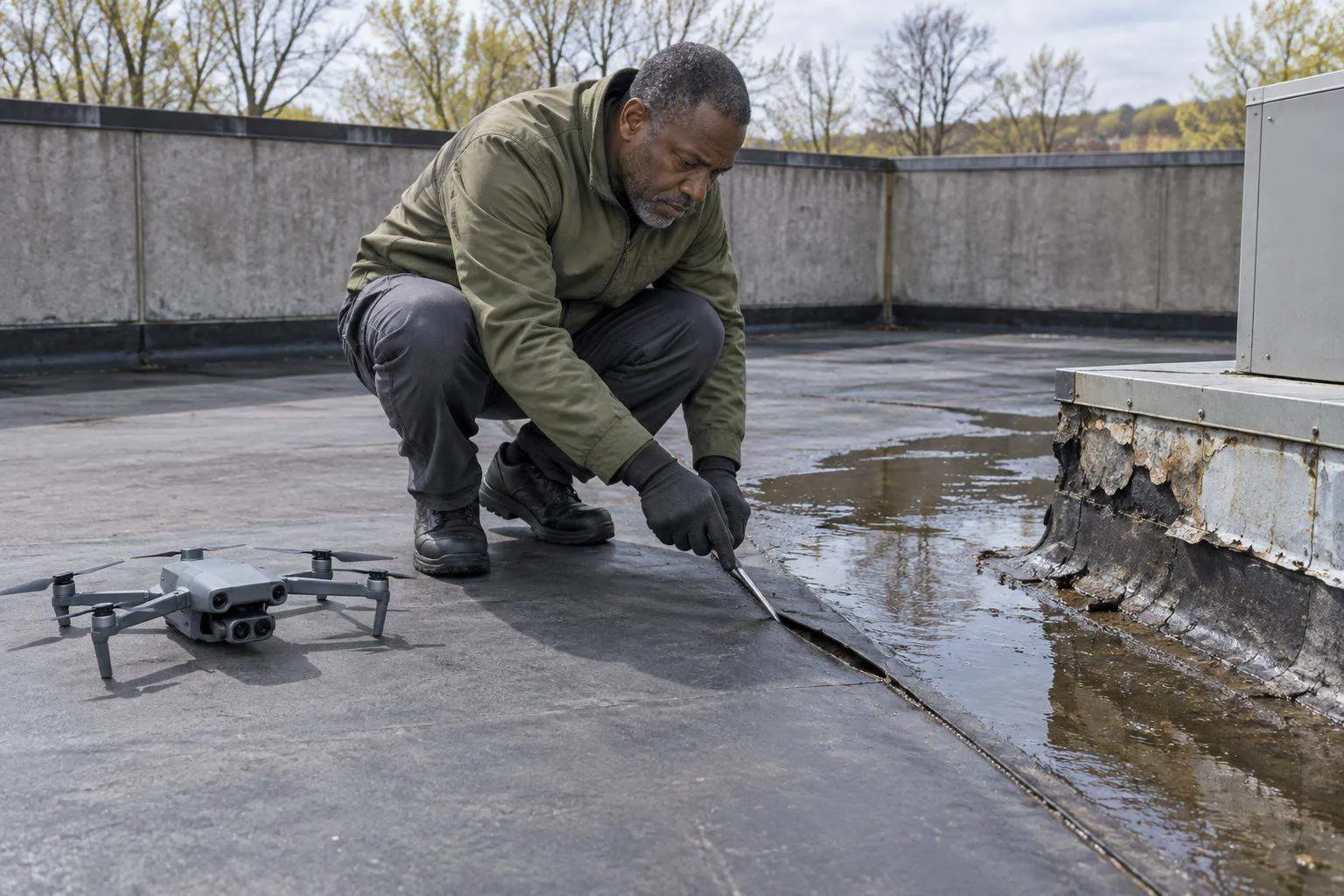
Stage 5 — The Actual Flight (~20 minutes) Yes, really. For a standard roof inspection, the drone flight itself is about 20 minutes. The pilot maintains visual line of sight throughout, even on automated flight paths.
Stage 6 — Data Processing (hours to days) Raw imagery goes through photogrammetry software to generate orthomosaic maps and 3D models. Defects get annotated with location, severity, and recommended repair action.
Stage 7 — Report Delivery (24–48 hours post-flight) Final deliverable: annotated report, geotagged photo set, any 3D outputs. A good provider includes a summary section, not just a file dump.
| Stage | Who Owns It | Time |
|---|---|---|
| Desktop Assessment | Provider | ~1 hour |
| On-Site Flight | Provider | ~20 minutes |
| Data Processing | Provider | 4–24 hours |
| Final Report Delivery | Provider | 24–48 hours total |
| Site Access/Permits | You | Before flight day |
What You Need to Provide
This part gets skipped in every buyer’s guide. Your provider cannot do their job without:
- Site access with a named contact who can let them in
- Any existing structural drawings or prior reports (helps them calibrate what they’re looking for)
- Permit confirmation for restricted or private sites — don’t assume the provider handles this
- A clear brief on defect types — “check the roof” is not a scope
Pro Tip:If you have a solar array and suspect internal electrical issues, be explicit upfront. Most drone pilots aren’t equipped for deadfront removal or electrical diagnostics. The ones who are charge a premium ($35–75+ per project) and need to know in advance.
Timeline Expectations (Realistic Version)
- Quote to booking: 1–3 business days for a standard site
- Booking to flight day: 3–7 days (weather windows, airspace clearance if needed)
- Flight to final report: 24–48 hours for standard inspections; longer for complex 3D outputs
- Rush jobs: Possible, but expect to pay 20–40% more for priority processing
Practical Bottom Line
The seven stages above aren’t optional — they’re what separates a professional inspection from a guy with a Mavic and a Dropbox link. Before you hire anyone:
- Define your deliverable (annotated report vs. raw photos vs. 3D model)
- Confirm Part 107 certification and dual insurance coverage
- Ask for a sample report — judge the output, not just the pitch
- Set clear scope for anything below the surface
- Confirm site access and permits are handled before flight day
For a deeper look at how these services are priced and scoped by application, see our Complete Guide to Drone Inspection Services.
The drone flight is 20 minutes. Everything around it is what you’re actually paying for.
Done reading? Get quotes from drone inspection services near you.
Takes about a minute. Free, no obligation; providers reply to you directly.
Popular cities:
Nick built this directory to help general contractors and risk managers find FAA Part 107-certified drone inspectors without wading through generalist photography outfits that added a drone as an upsell — a conflict of interest he ran into when trying to document storm damage on a commercial roof and couldn’t tell which operators carried the commercial liability insurance to back their reports.